
In a year marked by shifting macro narratives and renewed enthusiasm for real assets, platinum and palladium have emerged as standout performers in the commodity space. Both metals posted strong price gains in Q2 2025, driven by tightening supply and resilient industrial demand, prompting a strategic reappraisal of their place in diversified commodity portfolios. With inflation lingering and geopolitical risk disrupting global supply chains, the investment case for platinum group metals (PGMs) as both an inflation hedge and a source of structural growth exposure is gaining renewed momentum.
Platinum spent much of the past decade treading water, weighed down by the fallout from Volkswagen’s 2015 “Dieselgate” scandal. As diesel vehicle demand declined in favour of gasoline engines, platinum—heavily used in diesel catalytic converters—saw its industrial demand and price momentum stall. In contrast, palladium, the dominant metal in gasoline catalytic converters, became the unexpected beneficiary. Its price more than tripled between 2018 and 2022 before retreating in a prolonged correction. Now, after years in the doldrums, both metals have reawakened—platinum and palladium futures are up +58% and +40% year-to-date, respectively.
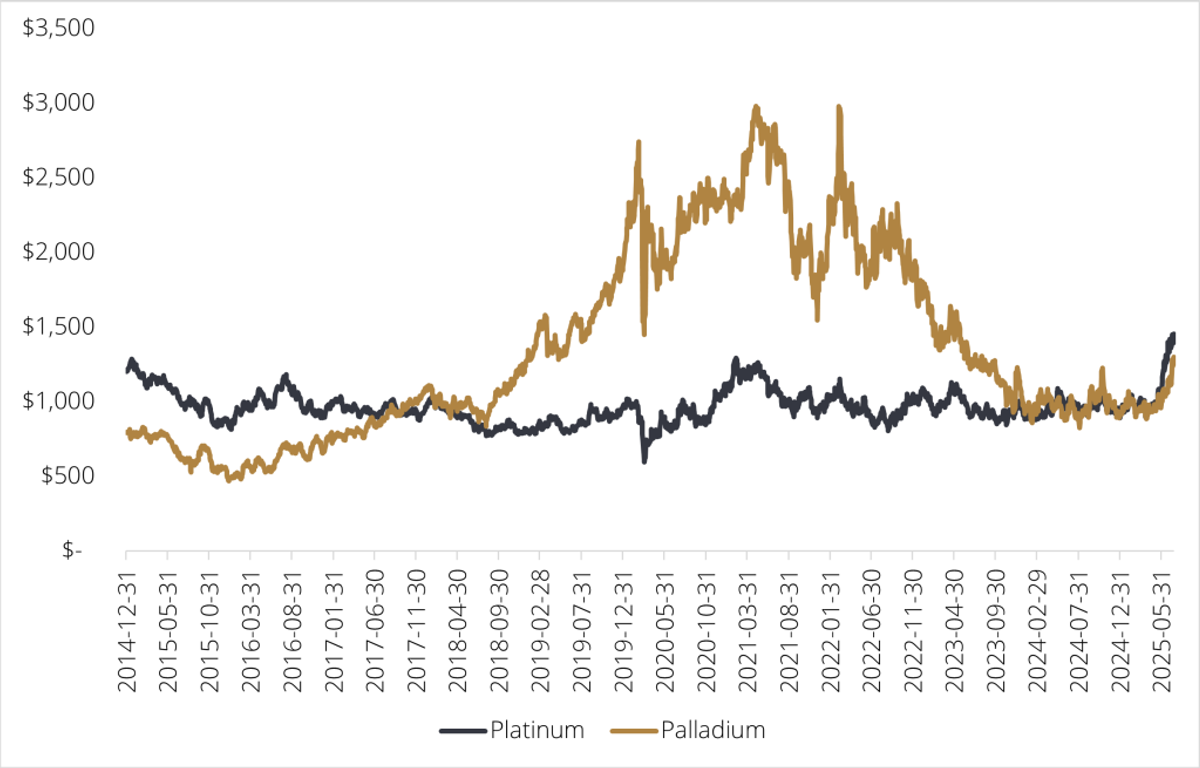
FIGURE 1: Platinum & Palladium, Front-Month Futures, USD per Troy Ounce (2015 – 2025) (Source: Bloomberg)
A decade-long bear market has pushed platinum producers into survival mode, curtailing output and prioritizing cash preservation over capital investment. With South Africa accounting for roughly 70% of global supply, mining companies have restructured operations, cutting spending on new shafts and maintenance. As a result, the World Platinum Investment Council (WPIC) forecasts a 6% decline in global mined production in 2025. This marks the third consecutive year of supply shortfalls, steadily drawing down above-ground inventories to just three months of demand cover—the lowest level since 2016.
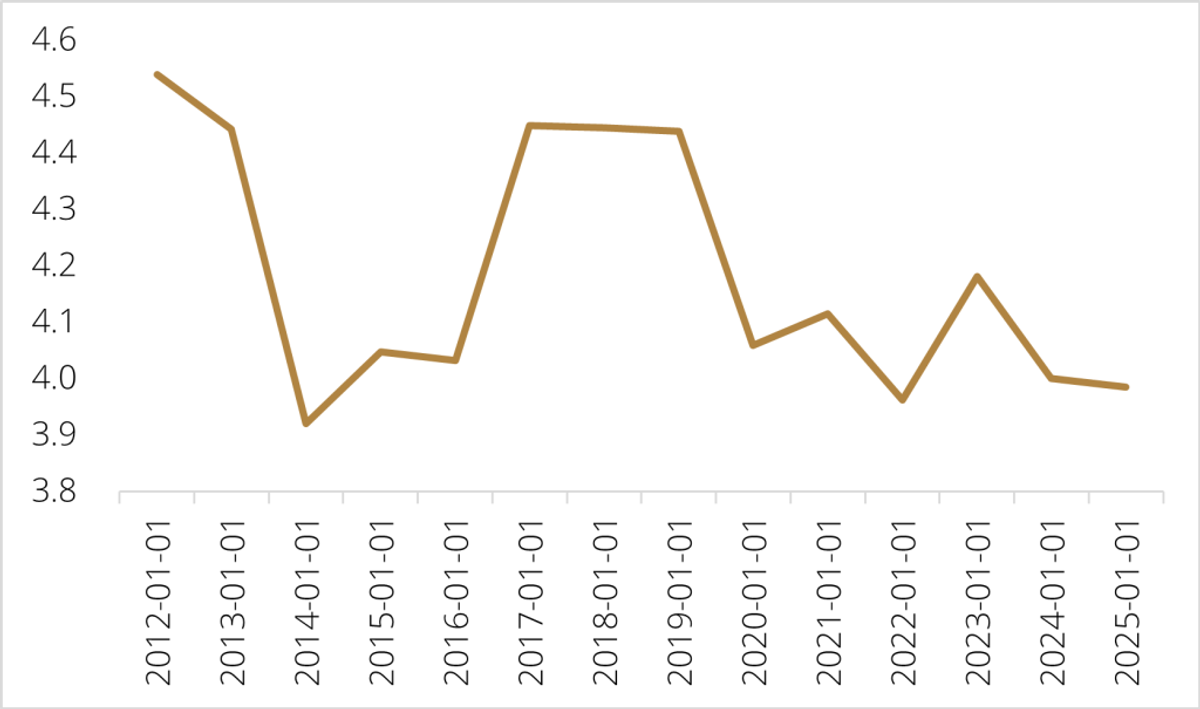
FIGURE 2: South African Platinum Mine Production, Rolling Three-Year Average, Million Troy Ounces (2012 – 2025) Note: 2025 Production Numbers Are Estimated By WPIC. (Source: Bloomberg, Metals Focus Data Inc., World Platinum Investment Council)
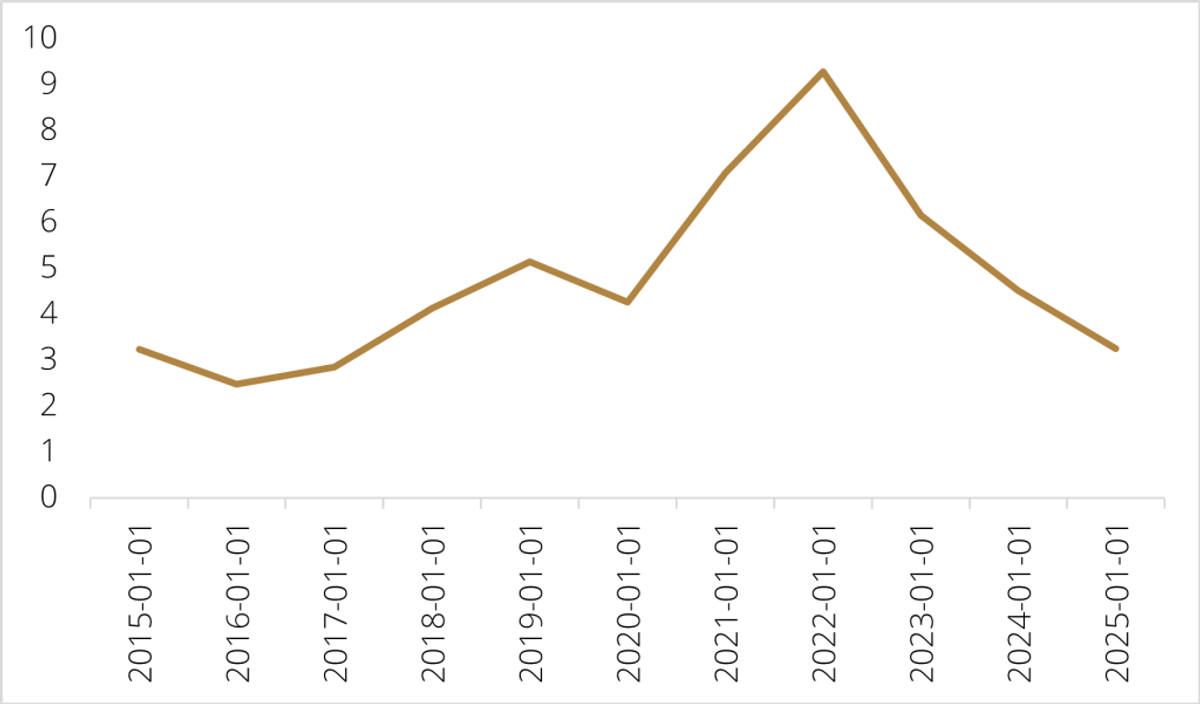
FIGURE 3: Platinum Above Ground Stocks to Demand Cover, Months (2015 – 2025) Note: 2025 Production Numbers Are Estimated By WPIC. (Source: Bloomberg, World Platinum Investment Council)
Palladium faces similar structural supply challenges, with global mine production projected to decline by almost 6% in 2025. While the anticipated deficit is smaller than platinum’s, it would mark the fifth consecutive year of undersupply. South Africa, which contributes about 35% of global palladium output, continues to grapple with aging infrastructure and operational setbacks. Meanwhile, Russia—responsible for roughly 45% of global supply—has maintained stable production volumes, but mounting sanctions and logistical hurdles have raised questions around long-term reliability, embedding a persistent geopolitical risk premium into the palladium market.
A further constraint on PGM supply has been the continued decline in recycling, particularly from automotive catalytic converter scrap—the largest source of secondary supply. Industrial use accounts for roughly 65% of platinum demand and 95% of palladium, with automotive catalysts representing around 37% and 81% of total demand, respectively. COVID-era supply chain disruptions reduced new vehicle production and drove up used car prices, prompting drivers to hold onto their vehicles longer. That trend has persisted, with elevated new car prices and uncertainty over tariff impacts dampening turnover. While the WPIC expects recycled supply to rise modestly in 2025, volumes are likely to remain well below pre-COVID levels, underscoring the fragility of recycling as a buffer against shrinking mine output.
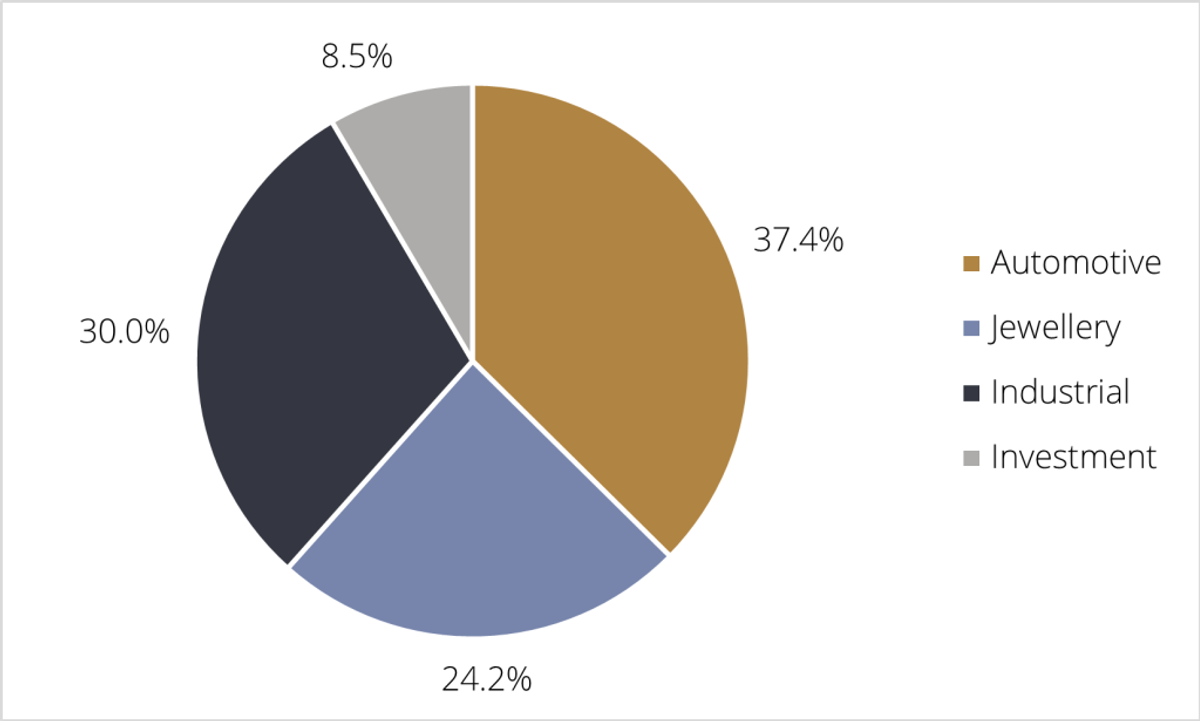
FIGURE 4: Platinum Demand Sources, Percentage of Total, 2024 (Source: World Platinum Investment Council, VIP)
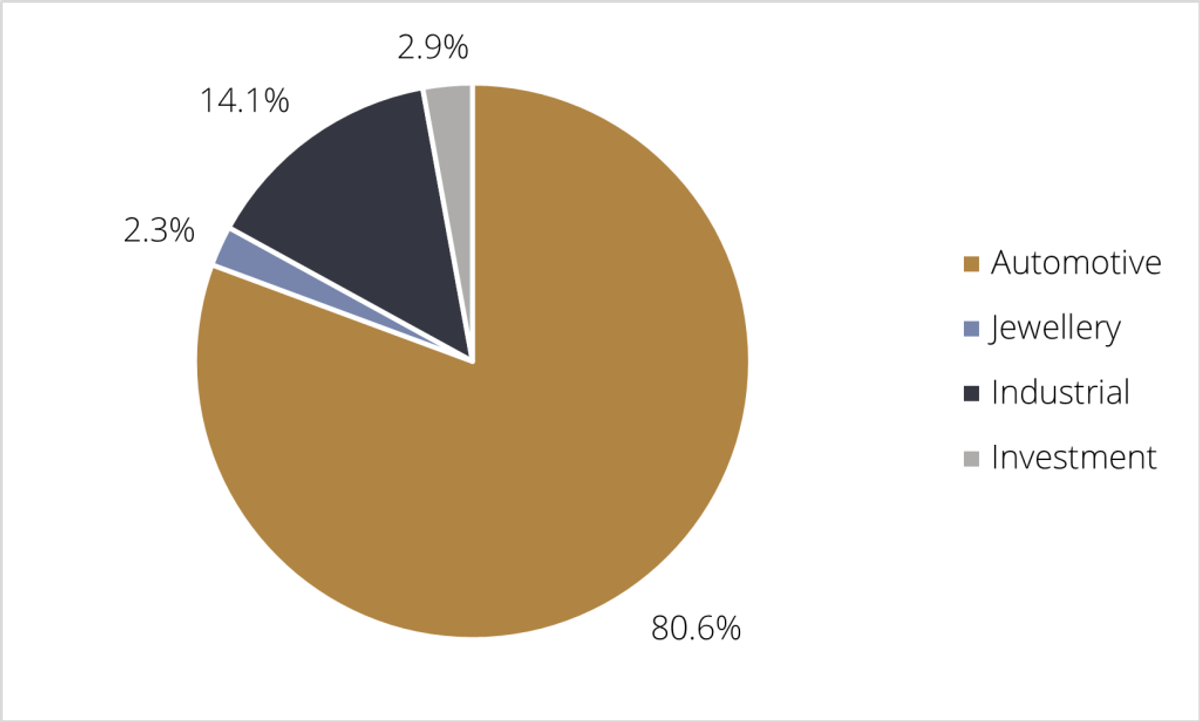
FIGURE 5: Palladium Demand Sources, Percentage of Total, 2024 (Source: World Platinum Investment Council, VIP)
As with many commodity rallies, the surge in platinum and palladium prices is being fueled by a fragile supply backdrop meeting resilient demand. Automotive use—the largest end-market for both metals—has remained steady, bolstered by slowing battery electric vehicle (BEV) adoption in the U.S., where expiring tax credits, high prices, and limited charging infrastructure have dampened growth. At the same time, hybrid vehicle sales are accelerating and in some regions—like China—are even outpacing BEVs. This shift is significant for PGMs: catalytic converters in hybrids require 30–50% more platinum group metals than traditional ICE vehicles due to frequent engine start-stops, which produce cold-start emissions that demand higher PGM loadings to meet regulatory standards. The growing hybrid mix could support incremental palladium demand in particular, though platinum would also likely benefit as automakers are increasingly seeking substitution opportunities to manage PGM cost exposure.
A secondary catalyst behind platinum’s rally in 2025 has been what many are calling “gold fatigue.” With gold prices at record highs, investors seeking inflation hedges through precious metals are increasingly turning to undervalued alternatives like platinum. Unlike palladium, platinum has a dual identity: around 30% of its demand comes from jewellery and investment, aligning it more closely with traditional precious metal behaviour. In China, platinum jewellery fabrication surged 26% year-over-year in Q1, as consumers shifted away from costlier gold products in search of relative value.
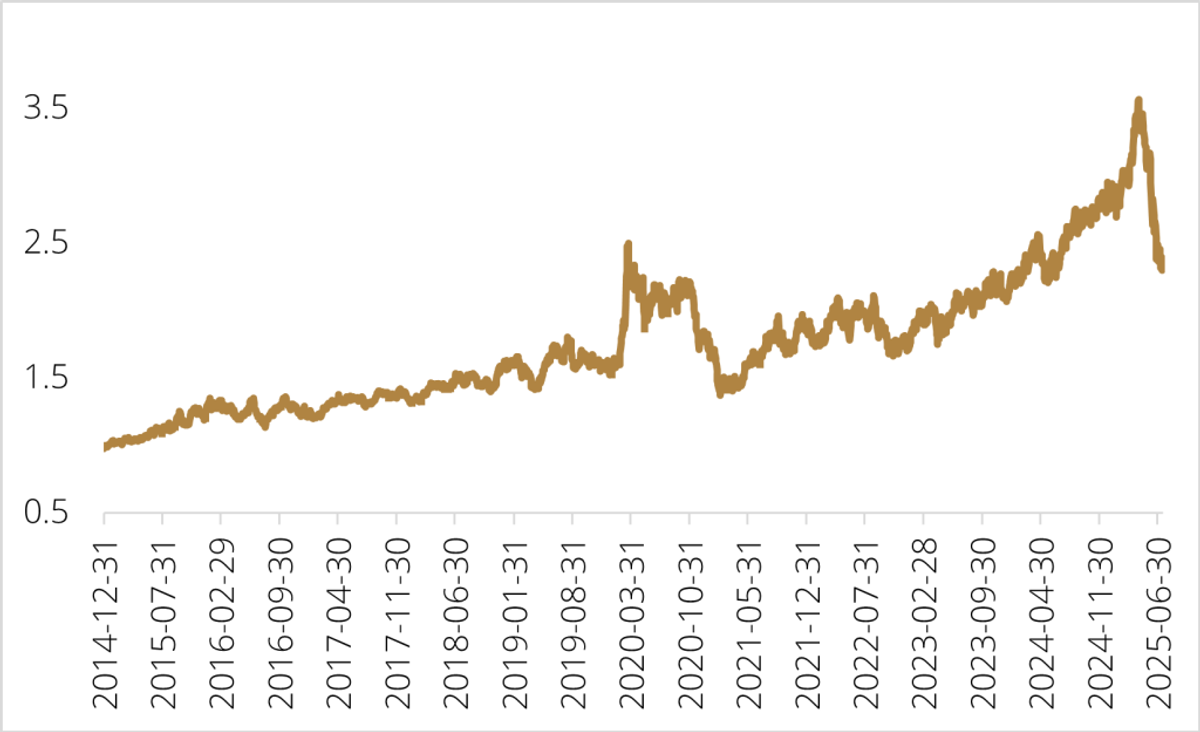
FIGURE 6: Gold to Platinum Ratio, Front-Month Future Price (2015 – 2025) (Source: Bloomberg, VIP)
While the long-term transition to electrification often casts a shadow over platinum and palladium, the near- to medium-term outlook tells a different story. Years of underinvestment, production disruptions in key regions like South Africa, reliability concerns surrounding Russian production, and reduced recycling have created a fragile supply base. Meanwhile, resilient internal combustion engine sales—particularly hybrids—are driving steady demand, with the potential for upside surprises. With inventories already thin and substitution trends still evolving, the PGM market remains highly sensitive to demand shocks, making these metals a compelling source of supply-driven return.
Yet many widely used commodity benchmarks, such as the Bloomberg Commodity Index and S&P GSCI, exclude PGMs entirely due to their production-weighted methodologies. This creates a blind spot for investors seeking comprehensive inflation protection. In an era of fractured supply chains and heightened geopolitical risk, exposure to a broader array of commodities—including critical metals like platinum and palladium—is essential for capturing a diversified inflation premium.
The Viewpoint Diversified Commodity strategy is designed to address this gap. By applying a risk-balanced framework, the strategy has actively participated in the recent PGM rally while prudently rebalancing exposure as volatility has risen. This disciplined, forward-looking approach enables investors to benefit from structural trends across the commodity landscape—not just in oil and gold, but in the underappreciated corners of the market where supply fragility and demand resilience intersect.
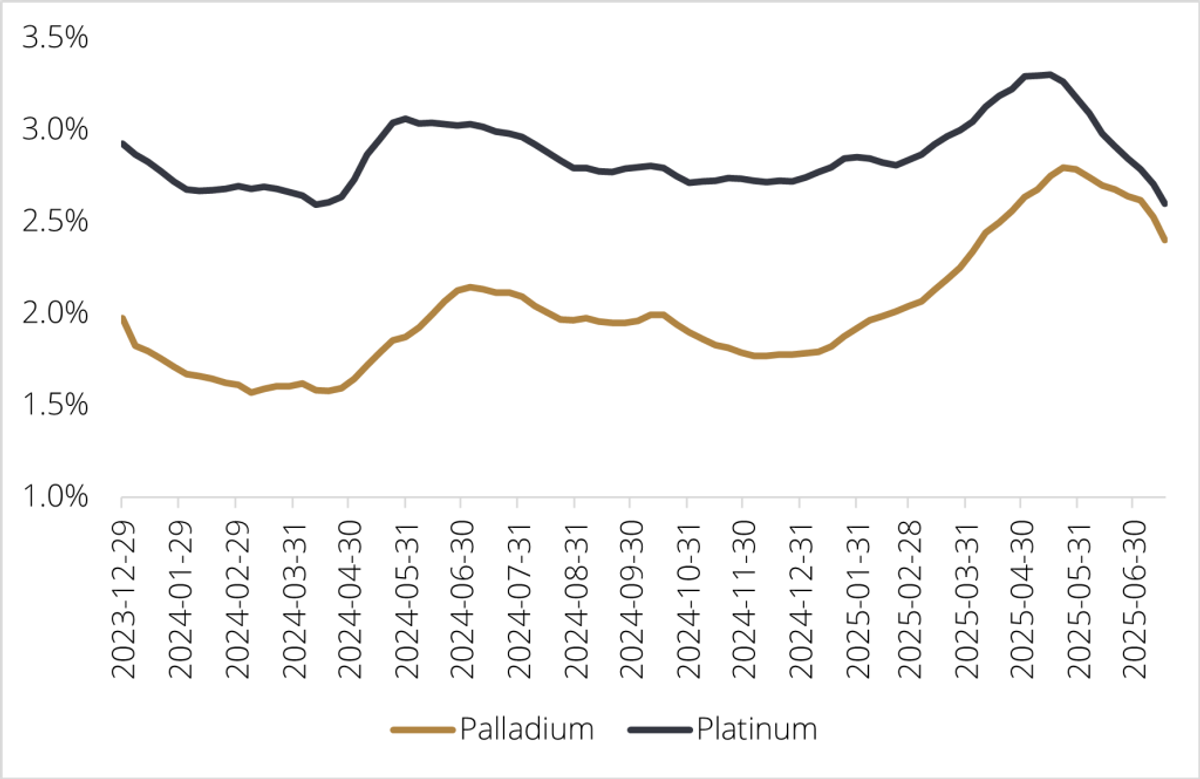
FIGURE 7: Viewpoint Diversified Commodities, Model Capital Weights (YTD) (Source: VIP)
Happy investing!
Scott Smith
Chief Investment Officer