
Gold has been making headlines this year, extending an uptrend that began in late 2022. Recent months have been especially sharp, with higher prices accompanied by more volatility. Even after a pullback of 6% from last week’s all-time high, gold remains up 7% in October, 50% year-to-date, and 30% annualized since September 2022.
Gold has rallied because it fits multiple narratives at once: rising geopolitical tensions, concerns about U.S. institutional independence, AI-driven labour dislocations, and the risk that monetary policy easing re-ignites inflation. While each theme can have more targeted expressions in financial markets, gold’s role as a catch-all macro hedge has been a key driver this year.
Because gold is a store of value rather than a commodity consumed in an industrial capacity, holding it carries a negative yield—mainly the financing (opportunity) cost, plus storage and insurance. Historically, that’s meant a negative relationship with real interest rates: higher real rates raise the cost of carry and put downward pressure on prices. That link held for roughly two decades, until late 2022, when gold rose despite rising real rates.
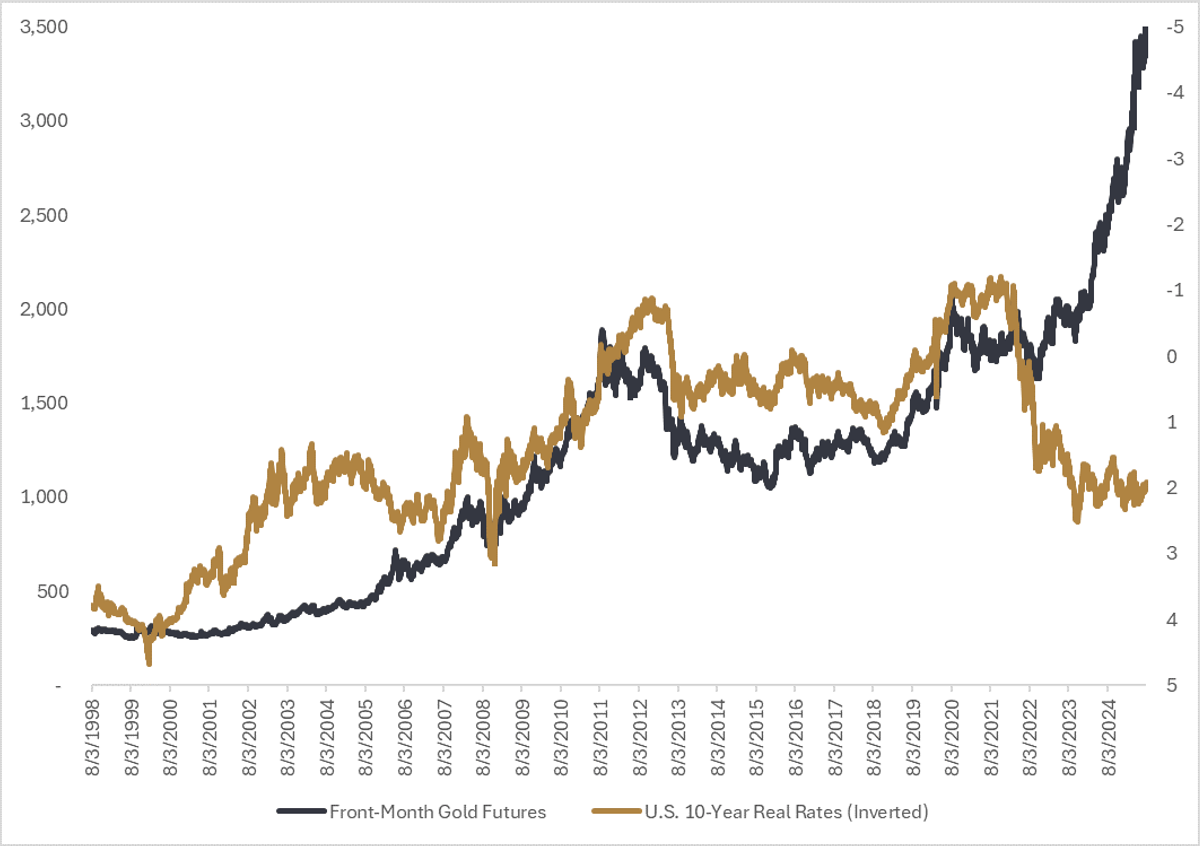
FIGURE 1: Front-Month Gold Futures versus U.S. 10-Year Real Interest Rates (Inverted), (August 1998 – August 2025) Source: Bloomberg, VIP
A key catalyst for that decoupling was a surge in physical demand from central banks. Central-bank buying accelerated after the U.S.-dollar assets of Russia’s central bank were frozen following the Ukraine invasion. However, this precedent wasn’t new: Afghanistan’s central bank had its assets frozen after the Taliban takeover in 2021. But Russia’s size—at the time a member of the G20 and the world’s 11th-largest economy—made it systemically salient and a wake-up call to emerging-market central banks operating in an increasingly fractured geopolitical environment.
While emerging-market central banks like Türkiye, India, and China have been large buyers of gold, developed-market central banks like Poland, Singapore, and the Czech Republic have also been increasing their exposure over the last two years.
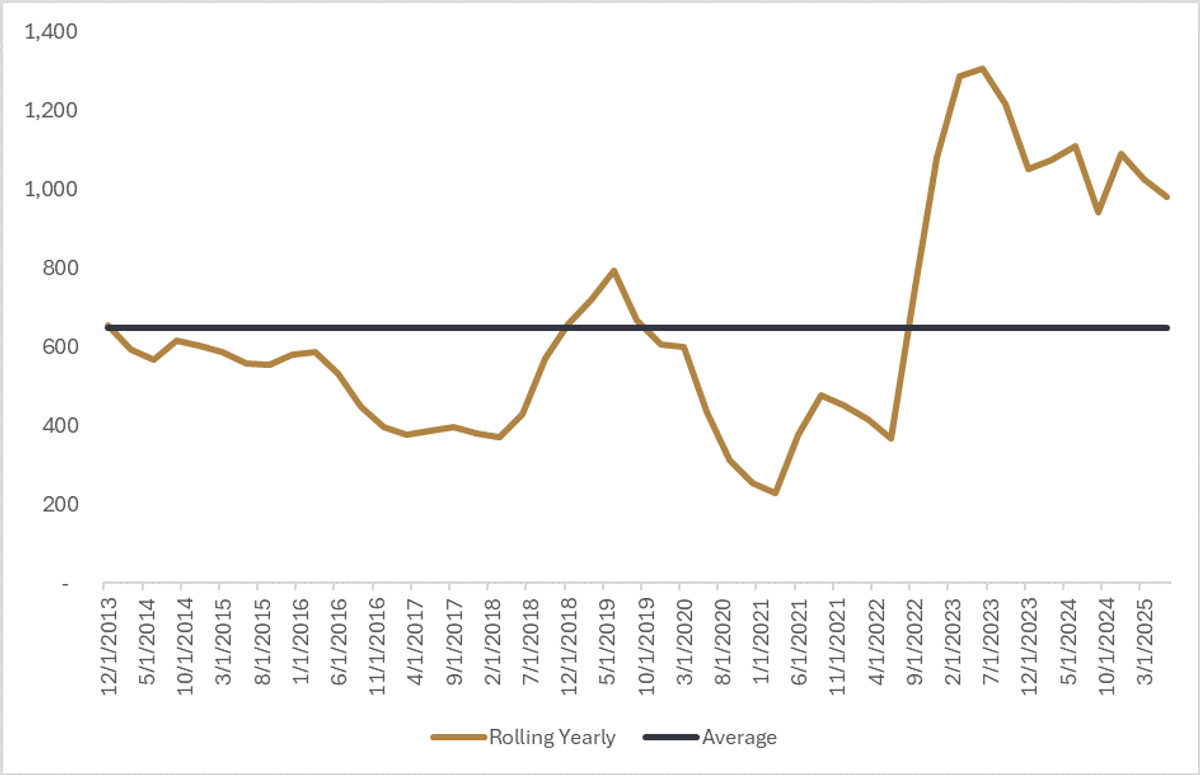
FIGURE 2: Central Bank Gold Purchases, Metric Tons, Rolling Yearly (2013 – 2025) Source: Bloomberg, VIP
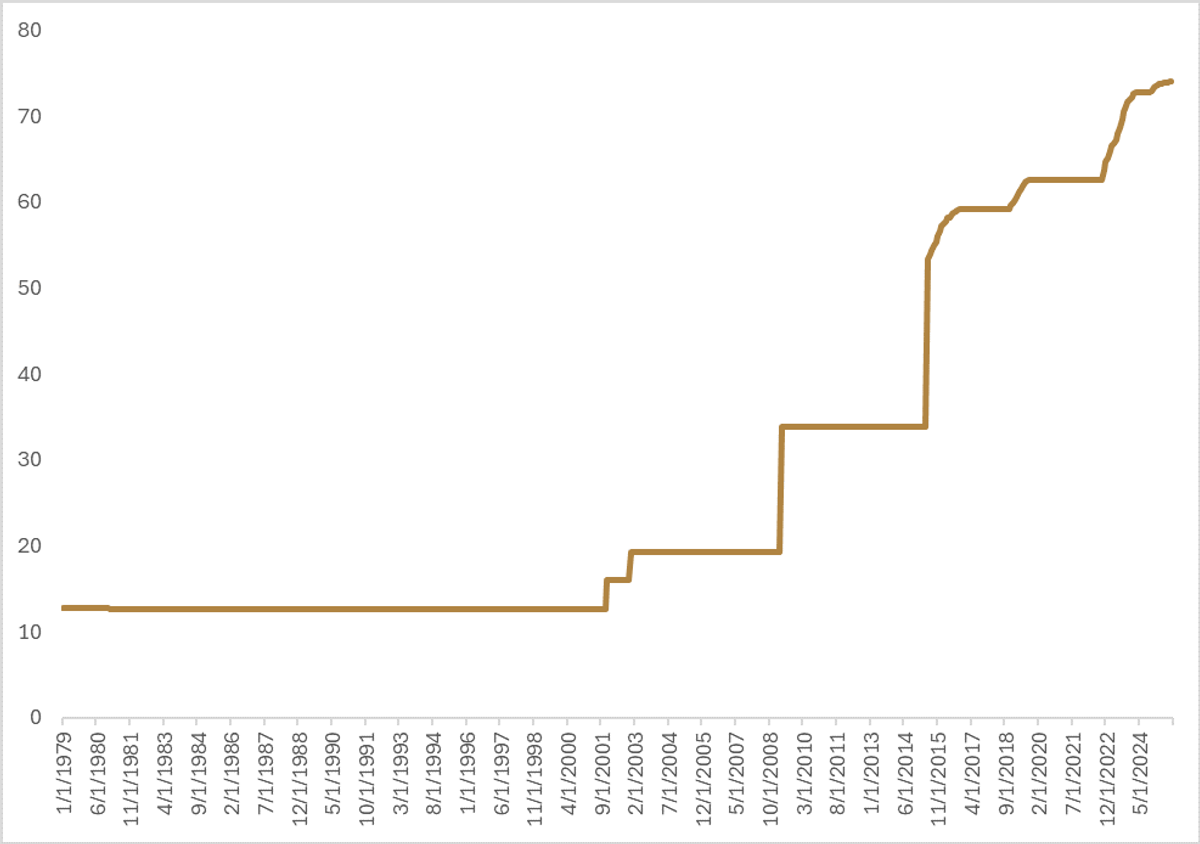
FIGURE 3: People’s Bank of China, Gold Reserves, Million Troy Ounces (1979 – 2025) Source: Bloomberg
On a commodities panel over the summer, we argued that we’re in the early innings of a new commodity supercycle and that gold and other precious metals are central to this view. I noted that while much of the rally in gold had thus far been supported by central-bank buying, an interesting fact was that we were just starting to see interest from retail investors pick up. As a proxy for retail investors, the assets under management for gold exchange-traded funds (ETFs) had remained fairly subdued throughout most of 2024 despite the strong rally.
Our view was that another leg higher in gold prices could come from the retail community should inflation worries start to crop up again as monetary policy eases against a backdrop of continued strong economic growth. Although headline inflation has moderated in recent months—beneath the headline numbers there are some more worrisome increases like electricity costs and groceries—the retail community has started to take note and has been increasing exposure to gold.
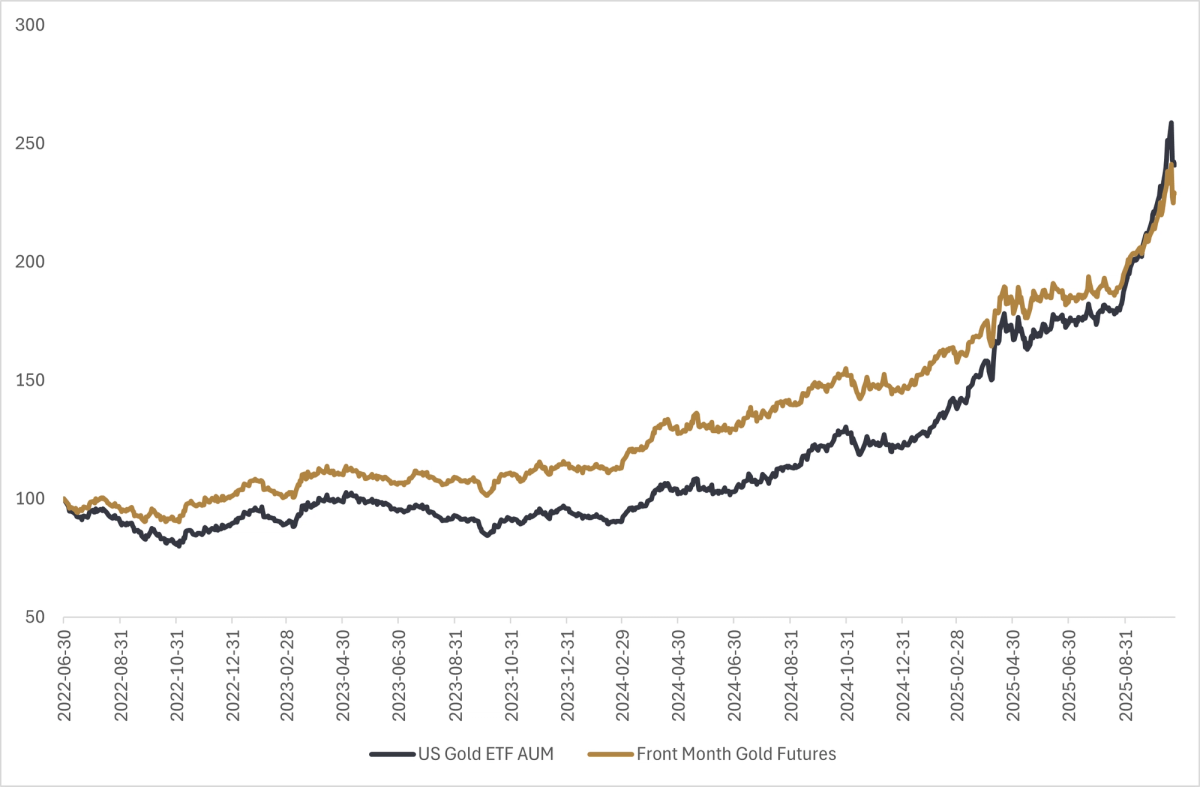
FIGURE 4: Front-Month Gold Futures versus U.S. Gold ETF AUM, Rebased to 100 (2022 – 2025) Source: Bloomberg
As retail interest has picked up on the gold story, the upward spike in prices has come with increasing volatility. One-month at-the-money volatility for options on gold has reached levels similar to those seen during Russia’s invasion of Ukraine in early 2022. In response, the Viewpoint Diversified Commodities strategy has been prudently rebalancing its capital allocation to gold in order to keep its risk exposure stable. While we still believe in many of the underlying themes that have been propelling gold’s rally over the last few years, prudently managing capital exposure through a risk allocation framework aims to reduce concentration risk and keep a more balanced risk profile. In addition to mitigating concentration risk through active capital allocation, we also advocate for a diversified opportunity set that has exposure to other precious and industrial metals like silver, platinum, and palladium. We recently wrote a piece on supply concerns of industrial metals like platinum and palladium have led to dramatic increases in price (up 70% and 60% respectively YTD), while their correlation to gold is only 0.42 and 0.31 respectively.
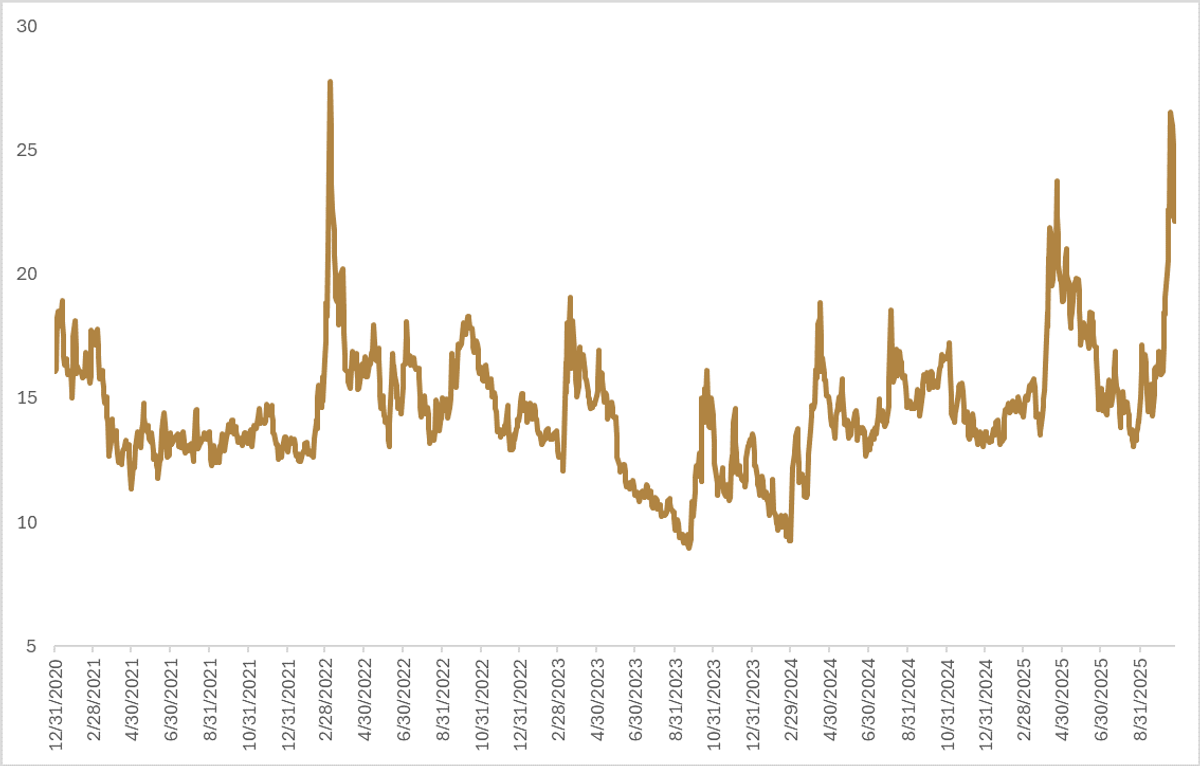
FIGURE 5: Gold One-Month ATM Volatility (2021 – 2025) Source: Bloomberg
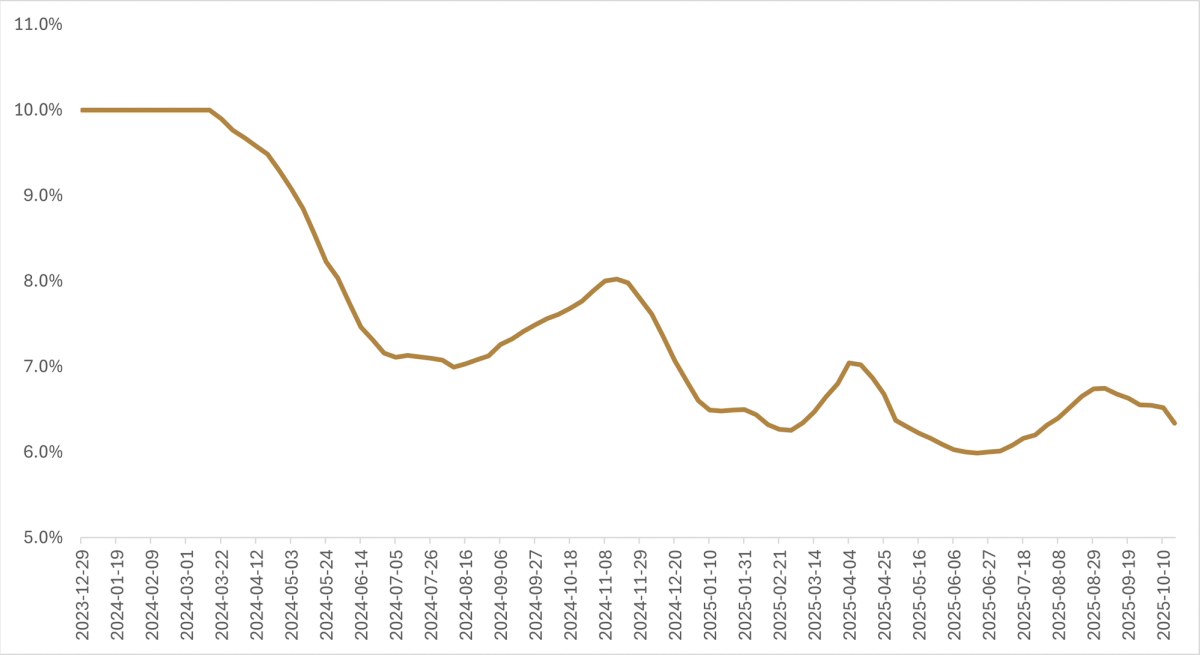
FIGURE 6: Viewpoint Diversified Commodities, Gold Capital Allocation (2024 – 2025) Source: VIP
In a world of fractured geopolitics and shifting policy regimes, commodities remain a strategic pillar of portfolio resilience. Gold’s surge underscores its value as a catch-all macro hedge, but the durability of commodities exposure comes from breadth: a diversified, rules-based allocation across precious metals, industrial metals, energy, and agricultural markets reduces concentration risk, smooths volatility, and provides a more durable return path—whether the driver is sanctions risk, supply tightness, or cyclical demand. The Viewpoint approach to commodity exposure keeps gold in focus while sizing exposures through a risk-allocation framework and pairing it with complementary metals like silver, platinum, and palladium, aiming for a sturdier, more dependable portfolio through changing macroeconomic regimes.
Happy investing!
Scott Smith
Chief Investment Officer